USB-C has become a ubiquitous standard for charging and data transfer across a wide range of devices, including smartphones, tablets, laptops, and peripherals.
However, not all USB-C cables are created equal when it comes to charging capabilities. Here's what you need to know about USB-C cables and their suitability for charging various devices.
USB-C Cable Types
- Charging vs. Data Transfer: USB-C cables can be categorized based on their intended use—charging, data transfer, or both. While most USB-C cables support both functions, some are designed specifically for faster charging speeds, data transfer rates, or other specialized purposes.
- Power Delivery (PD) Compatibility: USB-C cables that support Power Delivery (PD) are capable of delivering higher power outputs, essential for fast charging compatible devices like smartphones, tablets, and laptops. The power output capability varies among USB-C cables, with some supporting up to 100W or more, depending on the device and charger specifications.
- Quality and Certification: It's crucial to choose USB-C cables that are certified by reputable standards organizations like USB-IF (USB Implementers Forum) or comply with USB Power Delivery specifications. Certified cables ensure safety and compatibility, preventing potential damage to devices from improper charging currents or voltage fluctuations.
Considerations for Charging Devices
- Device Compatibility: Different devices may require specific USB-C cable specifications to achieve optimal charging performance. For instance, laptops and high-powered tablets often require cables that support higher wattages for fast charging, while smartphones may have lower power requirements.
- Length and Durability: The length and durability of USB-C cables also impact their charging effectiveness. Longer cables may experience voltage drops, affecting charging speeds, while durable cables with reinforced connectors are more resistant to wear and tear over time.
Conclusion
While USB-C cables share a universal connector, their charging capabilities can vary significantly based on factors like Power Delivery support, certification, and intended use. For consumers, it's essential to choose USB-C cables that match the charging requirements of their devices, ensuring efficient and safe charging experiences. Understanding these nuances helps in making informed decisions when selecting USB-C cables for various electronic devices in your tech arsenal.
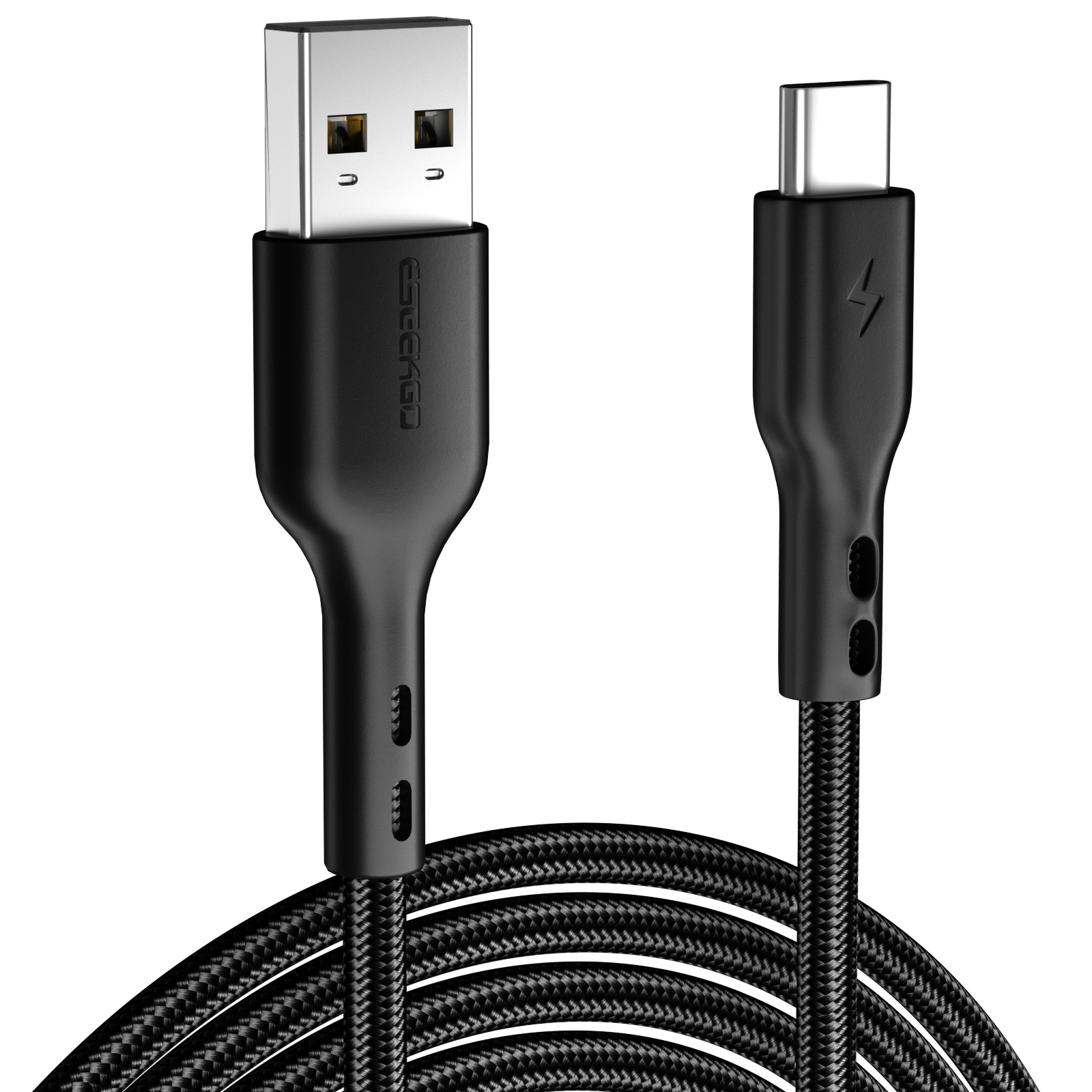
ESEEKGO G-31B Nylon Braided 3.0A 4FT USB To Type-C Data Cable
Fast Charging: 3.0A ultra high current, fast charging without damaging the device.
Integrated design: The interface is strong and wear-resistant, and will not break afterlong-term use.
Nylon braided: Braided wire has strong protective ability, durability, and resistance tobending and pulling.
Anti break: High toughness interface design, 30000+plug and unplug tests.

